
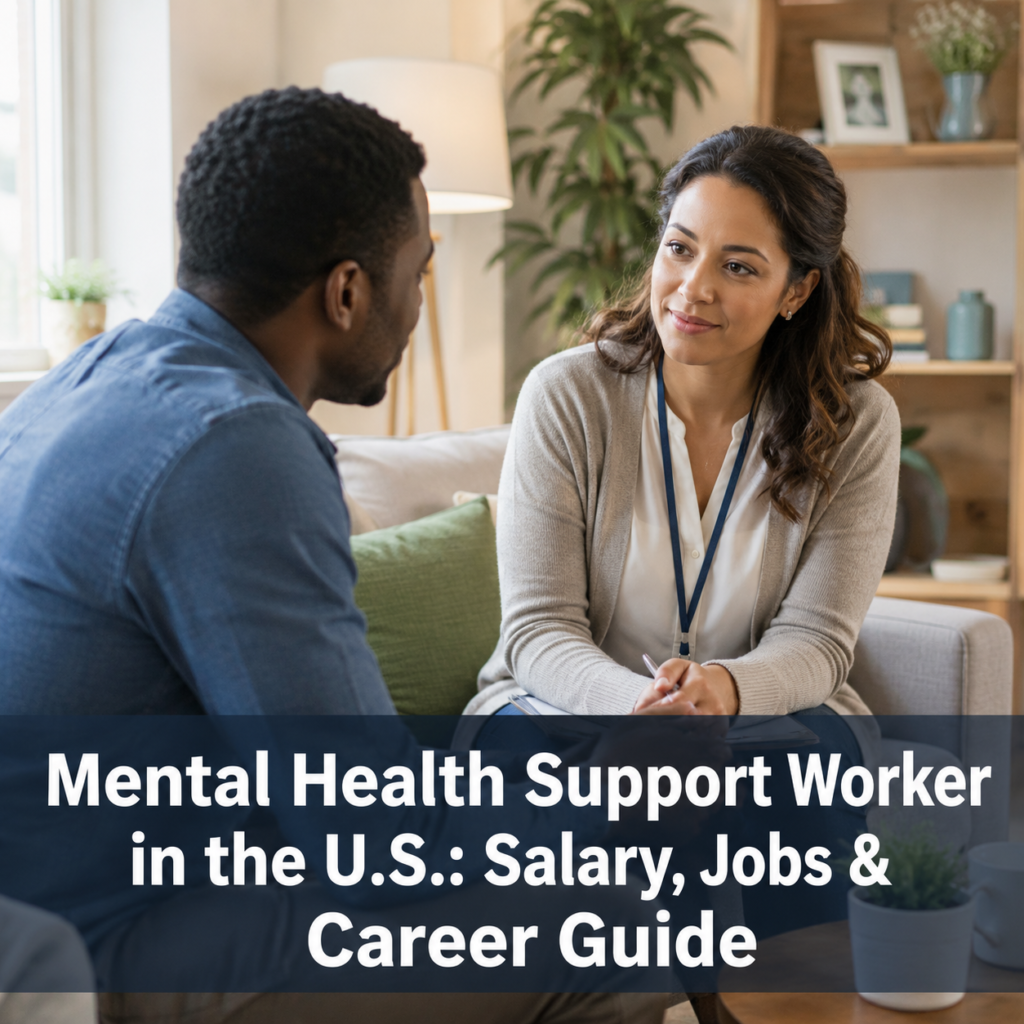
A specialised mental health support worker in the U.S. earns up to $58,000 to provide daily care, emotional support, and practical assistance to individuals living with mental health conditions.
If you’ve been searching for a career that offers both stability and a real sense of purpose, this article is specifically for you. Thousands of people are now exploring the role of a mental health support worker in the U.S. as America wakes up to the importance of mental healthcare.
The demand for these mental care professionals is rapidly increasing. In fact, according to the Bureau of Labour Statistics, roles for psychiatric technicians and aides, which include support workers, are growing faster than average. Whether you are a recent graduate, a worker changing careers, or an international applicant looking for a foothold in U.S. healthcare, this guide summarises everything you need to succeed.
Below, we will uncover exactly what a mental health support worker does, how much they earn, the qualifications you need for the job, and a step-by-step plan to land your first offer as a mental health assistant.
What Is a Mental Health Support Worker?
A mental health support worker in the U.S. is a frontline professional who provides daily care, emotional support, and practical assistance to individuals living with mental health conditions. These conditions may include depression, anxiety, bipolar disorder, schizophrenia, or substance use disorders.
These support workers help clients with daily routines, monitor their mental state, administer medication, and report changes to nurses or therapists. They do not provide therapy or diagnose conditions.
It is important to note that a mental health support worker is different from a therapist because therapists diagnose and treat mental illness through talk therapy. Mental support workers, on the other hand, handle the day-to-day living support and crisis observation.
What Does a Mental Health Support Worker Do?
Essential Skills Every Support Worker Needs
Mental Health Support Worker Qualifications and Requirements
Here is the truth: you can start this job without a college degree. Most entry-level mental health roles only require a high school diploma or GED plus a handful of simple certifications. Below is exactly what you need, how to get it, and what it costs.
Minimum Requirements
- High school diploma or GED: This is the standard for nearly all employers. If you do not have one, look into your state’s free GED preparation classes or adult education programs. Some community colleges offer them online.
- Clean criminal background check: Employers run a state and sometimes an FBI fingerprint check. Minor past offences may be waivable depending on the state and how long ago it happened.
- Negative TB test: Tuberculosis screening is required for anyone working in healthcare settings. You can get this at a local clinic, CVS MinuteClinic, or your county health department.
- First Aid & CPR certification: You need a Basic Life Support (BLS) or Heartsaver CPR/AED certification from the American Red Cross or American Heart Association. Courses often take 2 to 4 hours to complete. Many employers offer free onsite training after they hire you, but having it beforehand makes you a stronger candidate.
- Valid driver’s license and reliable transportation: This is only required for community mental health worker roles where you travel to clients’ homes. If you work in a hospital or residential facility, you usually do not need a car. Read the job description carefully.
- Ability to pass a drug screen: Most employers test for marijuana, cocaine, opioids, amphetamines, and PCP. Even if marijuana is legal in your state, many healthcare employers still prohibit it because they receive federal funding.
Preferred Complementary Requirements
These are not required for your first job, but they help you stand out and earn more.
- Certified Nursing Assistant (CNA) license. This is a state-issued credential that requires about 4 to 12 weeks of training. A CNA license proves you know basic patient care, and employers will pay you more for it.
- Mental Health First Aid certification. This is an 8-hour course offered by the National Council for Mental Wellbeing. It teaches you how to recognise signs of a mental health crisis and respond appropriately. Cost is around $50–$170, but many nonprofits offer it for free. You can find a class at mentalhealthfirstaid.org.
- Associate degree in psychology, human services, or social work. A two-year degree is not required for entry-level roles, but it becomes essential if you want to advance to case manager or behavioural health specialist later.
- Previous experience in caregiving. This does not have to be paid work. Volunteering at a homeless shelter, helping a family member with dementia, coaching youth sports, or working as a summer camp counsellor all count.
You can meet the minimum requirements in two weeks or less. The preferred qualifications take longer, but you can absolutely start working without them. Many people get hired with just a diploma, a clean record, and a willingness to learn.
How to Become a Mental Health Support Worker in the U.S.
Follow this six-step roadmap to land your first role within 4–8 weeks.
Step 1: Meet the educational requirement.
If you have a high school diploma, you are ready. If not, earn your GED; many states offer free programs.
Step 2: Get CPR and First Aid certified.
Classes cost $40–$80 and take one day. The American Red Cross and American Heart Association offer in-person and hybrid courses.
Step 3: Apply for your background check.
Most employers require a state and federal fingerprint check. In some states, you can complete this preemptively through the Department of Human Services.
Step 4: Target entry-level job titles.
Search for these specific terms on job boards:
- Mental health support worker jobs
- Mental health technician jobs
- Behavioural health support worker
- Community mental health worker
- Psychiatric aide
Step 5: Tailor your resume.
Highlight ANY experience with people: babysitting, coaching, volunteering at a food bank, tutoring, or caring for a family member. Use action verbs: “De-escalated,” “Supported,” “Observed,” “Documented.”
Step 6: Apply and interview.
Emphasise your patience, reliability, and willingness to learn. Employers know you will receive on-the-job training. They hire for attitude first.
How Much Mental Health Support Worker Earn in the U.S.
Compensation varies widely, but here is the national picture based on 2024–2025 data.
| Experience Level | Hourly Range | Annual Salary |
|---|---|---|
| Entry-level (0–12 months) | $15–$18 | $31,200–$37,000 |
| 1–3 years experience | $18–$22 | $37,440–$45,760 |
| Specialised (3+ years) | $22–$28 | $45,760–$58,240 |
| Hospital roles | $25–$32+ | $52,000–$66,560+ |
The mental health support worker salary in the U.S. averages $19.50 per hour nationally, according to salary aggregators like Payscale and Indeed. Overtime and shift differentials add 10–20%.
Best States for Support Worker Jobs
If you are willing to relocate, target these states for high demand and competitive wages.
| State | Why It’s a Top Choice | Hourly Wage |
|---|---|---|
| California | Massive investment in community mental health | $20–$28 |
| New York | OMH facilities are hiring hundreds of aides statewide | $19–$26 |
| Oregon | High need in rural areas + strong labour laws | $20–$27 |
| Massachusetts | World-class hospitals and unionised group homes | $21–$29 |
| Colorado | Expansion of Medicaid mental health services | $18–$24 |
| Texas | Lower pay but very low cost of living and thousands of openings | $15–$19 |
Rural counties in the Midwest and South desperately need community mental health workers. Some offer hiring bonuses that range from $1,000 to $5,000.
Where Do Mental Health Support Workers Work?
You are not stuck in one type of facility. Mental health support workers are needed in many different places. Here is where you could work:
- Hospitals. You work on psychiatric units, in emergency departments, or on behavioural health floors. Patients stay for a few days or weeks. The pace is fast, and you see new cases constantly.
- Residential treatment centres. These are live-in facilities for teens, adults, or people with dual diagnosis (mental health plus substance use). Clients stay for months. You build deeper relationships here.
- Group homes. Small community-based homes with 4 to 8 residents. This feels more like a family setting. You help with cooking, chores, medication, and outings. Very common for entry-level roles.
- Outpatient clinics. You assist with intake paperwork, take basic vital signs, and observe clients in waiting areas. Less crisis work. More regular daytime hours.
- Crisis stabilisation units. Short-term, intense support for 24 to 72 hours. Clients come straight from the street or emergency rooms. You need strong de-escalation skills here. Not for beginners, but great experience later.
- Schools. You support students with emotional or behavioural disorders. You might sit with a child having a meltdown, help them regulate, or run a social skills group. School hours mean nights and weekends off.
- Non-profit organizations. Homeless shelters, domestic violence safe houses, or harm reduction programs. These settings serve vulnerable populations with high trauma rates. The work is meaningful but emotionally heavy.
Your first job will likely be in a group home or residential treatment centre, because they hire the most entry-level workers. After six months of experience, you can move into hospitals or crisis units for higher pay.
Types of Mental Health Support Worker Jobs
The job title varies. Do not ignore these alternative names—they all lead to similar work.
- Behavioural health support worker: Often adds substance use disorder support.
- Psychiatric support worker: Typically in hospital or inpatient settings.
- Mental health technician (MHT): A popular title with slightly more clinical duties.
- Community mental health worker (CMHW): Travels to clients’ homes or apartments.
- Residential support worker: Lives on-site or works set shifts in a group home.
- Recovery support specialist (RSS): Often requires lived experience with mental health or addiction.
If you are just starting, search for all of these titles on job boards. “Mental health technician” and “residential support worker” have the most entry-level openings. “Community mental health worker” pays well but requires a car. “Recovery support specialist” is perfect if you have personal lived experience and want to use your story to help others. Do not get stuck on the name—focus on the job duties.
How to Find Mental Health Support Worker Jobs
Stop scrolling aimlessly. Use this targeted job search strategy.
Resume Advice
- Use the exact job title from the listing; if they say “Mental Health Technician,” use those words.
- Include a “Relevant Experience” section that lists caregiving, coaching, teaching, or volunteering.
- List your CPR/First Aid expiration dates prominently.
Interview Preparation
Expect questions like:
- “Tell me about a time you calmed someone down.” Use a personal example—angry customer, upset child, frustrated friend.
- “How do you handle stress?” Name specific habits: exercise, journaling, talking to a supervisor.
- “What would you do if a client refused medication?” Answer: Stay calm, ask why, offer choices if possible, document, and report to the nurse.
Networking Tips
- Join Facebook groups like “Mental Health Support Workers USA” or “Behavioural Health Jobs.”
- Attend National Alliance on Mental Illness (NAMI ) support meetings—employers recruit there.
- Ask for a shadow shift or tour before applying. Showing genuine interest gets your resume pulled.
Your resume should scream “reliable and good with people” even without experience. Practice your three interview answers until they feel natural. Apply fast. Follow up with a thank-you email within 24 hours. Most people skip these steps. That is exactly why you will get hired.
Mental Health Support Worker vs Other Support Careers
Not sure if this is the exact path for you? Compare it to two similar roles.
| Feature | Mental Health Support Worker | General Support Worker | Senior Care Assistant |
|---|---|---|---|
| Primary focus | Mental illness, behavioural challenges | Physical disabilities, developmental disabilities | Elderly, dementia, physical frailty |
| Crisis risk | Moderate to high verbal aggression, self-harm | Low to moderate | Low; falls are main risk |
| Education | HS diploma + often required training | HS diploma | HS diploma + CNA often preferred |
| Work settings | Psych units, group homes, clinics | Group homes, day programs | Assisted living, nursing homes, home care |
| Average pay | $18–$24 per hour | $15–$20 per hour | $16–$22 per hour |
| Advancement path | Behavioural health specialist, case manager, RN | Supported living manager, social worker | LPN, RN, activities director |
If you are curious about general support roles in the UK, read our full guide: Support Worker Jobs UK 2026 Guide.
If you prefer working primarily with the elderly, explore Senior Care Assistant Jobs Guide.
Frequently Asked Questions
How much do mental health support workers earn in the U.S.?
The national average is about $19.50 per hour or $40,500 per year. Entry-level starts near $15 per hour, while experienced workers in hospitals or union roles earn $25–$32 per hour.
Can I become a mental health support worker without experience?
Yes. Many entry-level mental health jobs provide on-the-job training. Highlight transferable skills like patience, communication, and reliability from any previous job or volunteer role.
Is mental health support work a good career?
Yes, if you value stability, purpose, and advancement without a four-year degree. Demand is high, turnover creates openings, and many employers offer tuition reimbursement for nursing or social work degrees.
Are mental health support workers in demand right now?
Absolutely. The U.S. faces a severe shortage of frontline mental health staff. Many states offer hiring bonuses and overtime. Job growth is projected at 9% through 2033.
What is the difference between a mental health support worker and a therapist?
Therapists diagnose and treat mental illness through talk therapy. Support workers provide daily living assistance, emotional support, and safety monitoring. Support workers do not provide therapy.
What shifts do mental health support workers work?
Most roles require rotating shifts, including evenings, overnights, weekends, and holidays. Some outpatient or school-based roles offer Monday–Friday daytime schedules, but they pay less.
Can international applicants work as mental health support workers in the U.S.?
Yes, but you need work authorisation like a green card, EAD, or a specific visa like J-1 for training. Most employers do not sponsor H-1B visas for this role. Look for non-profits that offer visa support.
Your Next Step Is Simple
Becoming a mental health support worker in the U.S. offers a rare combination: meaningful human connection plus reliable employment.
You do not need a prestigious degree or ten years of experience. You need a high school diploma, a willingness to learn, and a genuine desire to help people during their hardest days.
In return, you gain:
- A career with 9% projected growth
- Multiple advancement paths (case manager, nurse, social worker)
- Shift flexibility for parents or students
- Daily purpose that few office jobs can match
What to do next? Update your resume to highlight the skill set. Get your CPR card this week. Search for “mental health support worker jobs near me” or “entry-level mental health jobs” on Indeed. Apply to five positions today.
The mental health field needs compassionate, reliable people. Could that be you?
Explore current mental health support worker openings and related healthcare support roles right now. Your new career is waiting.