
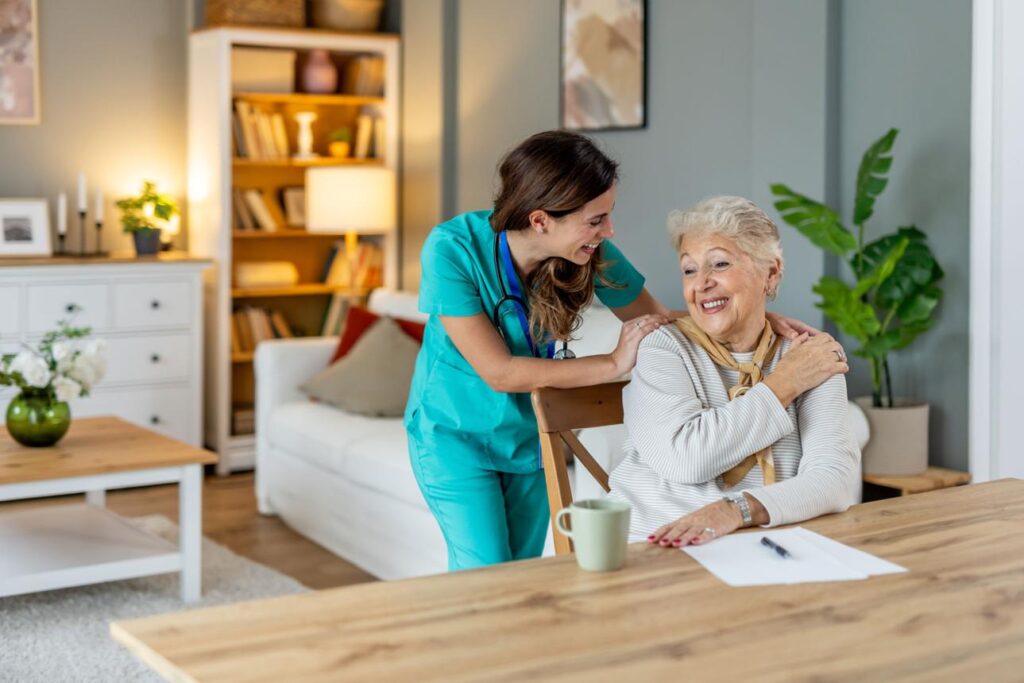
The demand for senior care assistant jobs is growing faster than almost any other occupation in the United States. With millions of baby boomers reaching advanced age, the need for compassionate, skilled caregivers has never been greater.
This surge in demand didn’t come as a surprise. By 2020, the United States had 55.8 million people who were aged 65 and older, representing 16.8% of the entire population, or roughly 1 in every 6 Americans. The Census Bureau described the 2010–2020 growth rate as the fastest increase in the older population since the late 1800s.
As the growth rate of the older population increases, so does the need for senior care assistants. Employment in this industry is projected to grow by 17% by 2034, far above the national average for all occupations. The industry is expected to generate approximately 765,800 job openings every year over the decade.
Whether you are a domestic job seeker looking for a stable entry‑level healthcare career or an international applicant seeking visa‑sponsored caregiver employment, this article provides everything you need to know.
We will cover daily responsibilities of caregivers, required certifications, salary expectations, work environments, differences between similar roles, how home care agencies operate, and, most importantly, actionable pathways to land a senior care assistant job in the U.S.
What Are Senior Care Assistant Jobs?
A senior care assistant helps elderly individuals with activities of daily living, mobility, medication reminders, companionship, and sometimes light medical tasks. These professionals work in private homes, assisted living facilities, nursing homes, hospice care, and senior living communities.
Unlike a registered nurse, a senior care assistant does not perform complex medical procedures, as they do not qualify for such roles. Instead, they focus on improving quality of life, maintaining dignity, and enabling seniors to remain as independent as possible.
While you proceed, I recommend that you read the Health Resources and Services Administration scholarships in the US for more related opportunities
What Do Senior Care Assistants Do?
I’ve had several job seekers ask me what the daily responsibilities of caregivers include, and I have dedicated this section to outlining these roles. While tasks vary by employer and client needs, the core duties include:
- Personal care: Bathing, dressing, grooming, toileting, and oral hygiene.
- Mobility assistance: Helping clients move from bed to chair, walking support, and transfer safety.
- Medication reminders: Ensuring seniors take prescribed medications at the appropriate times.
- Meal preparation: Cooking nutritious meals according to dietary restrictions.
- Light housekeeping: Laundry, dishwashing, changing linens, tidying living areas.
- Companionship: Conversation, playing games, reading, or accompanying on short walks.
- Transportation: Driving clients to doctor appointments or grocery shopping.
- Monitoring health changes: Reporting changes in appetite, mood, or physical condition to family or nursing staff.
In medical home care services settings, assistants may also perform basic health checks, such as blood pressure or temperature readings, under supervision.
Required Skills for Senior Care Assistant Jobs
You do not need a medical degree or years of healthcare experience to start a career in senior care. However, employers look for a specific combination of personality and character traits, as well as teachable, practical abilities. Below is a detailed breakdown of the skills that matter the most and how you can develop or demonstrate them – even without prior paid caregiving experience.
Soft Skills of a Senior Caregiver Job
Soft skills are often more important than technical knowledge because seniors and their families hire for trust, compassion, and reliability first. These can be learned and strengthened over time.
1. Patience and Empathy
Many seniors move slowly, repeat themselves due to memory loss, or become frustrated by physical limitations. Losing patience can damage their dignity and your working relationship.
2. Strong Communication Skills
You must understand verbal instructions from nurses, family members, and clients. You also need to report changes in health clearly to prevent a medical emergency. Basic conversational English is often enough to start, but many agencies require a minimum score on an English proficiency test.
3. Reliability and Punctuality
Seniors depend on you for meals, medication reminders, and bathroom assistance. If you are late or miss a shift, a client might fall, miss a pill, or go without food. Agencies fire unreliable aid workers quickly.
4. Problem-Solving Under Pressure
No two days are the same. A client might lock themselves out of the bathroom, refuse to take medication, or start crying unexpectedly. You need quick, calm solutions in such scenarios
5. Physical Stamina and Strength
You will stand, walk, bend, and lift for most of your shift. Transferring a 150‑pound person from a bed to a wheelchair requires core strength. Fatigue leads to injury – for you or the client.
6. Emotional Resilience
Clients may pass away, decline rapidly, or have difficult family members. Without emotional boundaries, compassion fatigue begins to set in. You can feel sad for a client, yet still return the next day with a positive attitude. You know when to talk to a supervisor or seek counselling.
Hard Skills Required for Senior Aid Assistance
Hard skills are teachable. Most agencies will train you on-site, but candidates who already possess them are hired faster and paid more.
1. Basic First Aid & CPR
Choking, falls, and cardiac events are common among seniors. Having the skills to respond immediately can save a life before paramedics arrive. You need to learn Adult CPR and first aid for falls, cuts, burns and other common home accidents.
2. Safe Transfer Techniques
Improper lifting is the number one cause of injury for caregivers. You must learn to move a person from bed to chair, toilet to wheelchair, or floor to bed without straining your back or dropping the client.
3. Infection Control
Seniors have weaker immune systems. A simple cold you bring from home can turn into pneumonia for a client. Therefore, handwashing, wearing gloves, disinfecting surfaces, and isolating linens are preventive measures against infections.
4. Meal Preparation for Special Diets
Many seniors have diabetes, high blood pressure, swallowing difficulty, or chewing problems. Serving the wrong food can cause a medical crisis. You can take a free online course like “Safe Food Handling for Caregivers”.
5. Medication Reminder Protocols
You generally cannot administer medication. But you can remind them, open pill organisers, and document which pill the client took, what time, and any side effects observed.
6. Basic Observation and Reporting
You are the eyes and ears for nurses and doctors, the closest person to the client. Small changes, such as a new bruise, loss of appetite, or confusion, must be documented
7. Use of Mobility Aids
You must know how to use mobility aids like canes, walkers, crutches, and wheelchairs. You will help the client adjust height, lock brakes, fold and store, and guide them safely over thresholds or carpets.
Employers also value hospitality careers crossover skills – if you have worked in hotels, restaurants, or customer service, your people skills translate directly to caregiving.
Qualifications Needed for Senior Care Assistant Jobs
One of the biggest sources of confusion for job seekers is the difference between what is legally required and what is preferred or optional. This section cuts through the noise.
For most entry‑level senior care assistant jobs in the United States, you do not need a high school diploma, a CNA license, or prior healthcare experience. You typically need:
- Ability to pass a criminal background check
- Negative TB test and basic physical health
- CPR & First Aid certification (many employers provide this for free)
- Reliability, English communication, and a compassionate attitude
That’s it. Everything else is either a preference that increases your chances or a requirement for specific work settings.
Minimum Requirements for Most Senior Caregiving Jobs
These are the non‑negotiable items that most U.S. home care agencies, assisted living facilities, and private families will ask for:
| Requirement | Details | Notes |
|---|---|---|
| Background check | This involves a review of your criminal history. Some employers also check driving record and sex offender registry. | Paid for by employer or deducted from first paycheck. Past minor offences do not automatically disqualify – be honest upfront. |
| Negative TB test | A simple skin or blood test showing no active tuberculosis. | Usually costs $20–50 at a pharmacy clinic or public health department. Some employers reimburse. |
| Basic physical exam | A doctor’s note stating you are physically able to lift, bend, and stand for extended periods. | Often a one‑page form. Many urgent care centres offer “employment physicals” for $50 to $100. |
| CPR & First Aid certification | Adult CPR and basic first aid for falls, choking, and bleeding. | Many agencies provide this during orientation at no cost. If you get it yourself, budget $30 to $70 through the American Red Cross or American Heart Association. |
| Proof of identity & work authorisation | For U.S. citizens: driver’s license, state ID, or passport. For non‑citizens: a valid work visa or employment authorisation document. | You cannot work without legal authorisation. International applicants must secure visa sponsorship before applying – see visa section. |
| Reliable transportation | A car or access to public transit to travel between clients’ homes. | Some agencies require a driver’s license and proof of insurance. Urban agencies may accept public transit. |
A high school diploma or GED is not a legal requirement for senior care assistant jobs in most states. Some assisted living facilities prefer it, but many home care agencies explicitly do not require it. If you lack a diploma, you can still find work – focus on demonstrating soft skills and reliability.
How Much Do Senior Care Assistants Earn in the U.S.?
Earnings vary by state, employer, experience, and certification. Data from the U.S. Bureau of Labour Statistics (BLS) for home health and personal care aides:
- National average hourly wage: $15.81
- National average annual salary: $32,900
- Top 10% earners: Over $38,500 – usually CNAs or agency specialists.
Highest Paying States for Caregiving Jobs
| State | Average Hourly Wage |
|---|---|
| Alaska | $19.45 |
| New York | $18.89 |
| California | $18.56 |
| Massachusetts | $18.12 |
| Washington | $17.98 |
Senior care assistant jobs in assisted living facilities may pay slightly less than private home care at-home positions, but facility jobs often offer benefits like health insurance, paid time off, and shift differentials. Private clients often pay $20 to $30 per hour directly
Key Differences Between Senior Care Assistant and Other Caregiving Roles
Many job titles in elderly care sound the same but have different requirements, pay, and work settings. Here is the simplest breakdown. Here is a clear breakdown of the core differences:
| Title | Medical Tasks? | Certification Needed? | Typical Workplace | Starting Pay |
|---|---|---|---|---|
| Senior Care Assistant | No (only reminders) | None, CPR is often required | Home, assisted living | $14–16/hour |
| Caregiver | No | None | Private homes | $13–15/hour |
| Personal Care Assistant | No | None (some states register) | Home, day programs | $13–16/hour |
| Home Health Aide | Yes (vitals, simple wound care) | State HHA certificate | Home health agency | $16–19/hour |
| Certified Nursing Assistant | Yes | State CNA exam | Nursing homes, hospitals | $18–22/hour |
What This Means for You
- If you want to start working immediately, apply for Senior Care Assistant or Caregiver jobs. No certificate needed beyond CPR. Most home care agencies will hire you within two weeks.
- If you want higher pay and don’t mind extra training, become a Home Health Aid. You can then work for Medicare‑funded agencies and earn $2–4 more per hour.
- If you want a career in nursing or to work in a hospital, consider becoming a Certified Nursing Assistant. This is the entry point for LPN or RN programs. CNAs have the most medical responsibility.
- If you want to work privately for a family, then use the title Caregiver or Personal Care Assistant. Families rarely require certification, but they value experience and references.
For most personal home care services and assistance home care, a senior care assistant or PCA is sufficient. For medical home health care, an HHA or CNA is typically required.
Types of Employers Who Hire Senior Care Assistants
You can find senior care assistant jobs across many settings:
- Home Care Agencies – The largest employer. Assign you to clients in their private homes.
- Assisted Living Facilities – Support residents who need help but not full nursing care.
- Nursing Homes – More medical focus; often prefer CNAs.
- Hospice Organisations – End‑of‑life emotional and physical support.
- Senior Living Communities – Independent living with optional care services.
- Private Families – Direct hire by a senior or their adult children.
- Adult Day Care Centres – Daytime supervision and activities.
How Home Care Agencies Operate
A home care agency acts as the middleman between caregivers and clients. The agency:
- Screens and trains assistants.
- Handles scheduling, payroll, and taxes.
- Provides liability insurance.
- Matches assistants with compatible seniors.
- Supervises quality of care.
This is the most common entry point for newcomers because agencies provide training and steady hours.
How to Successfully Apply for Senior Care Assistant Jobs
For U.S. Domestic Applicants
- Get CPR certified.
- Take a free HHA training course – Many agencies offer paid training.
- Create a simple resume highlighting patience, reliability, and any care experience.
- Apply directly to home care agencies – Search “senior care assistant jobs near me” or “home care agencies hiring.”
- Prepare for interview questions like: “How would you handle a client who refuses to bathe?” or “What do you do if you suspect a client is being abused?”
For International Applicants
- Step 1: Get your credentials evaluated.
- Step 2: Apply through a U.S.‑licensed international recruitment agency.
- Step 3: Secure a job offer from a visa‑sponsoring employer. You can use MyVisaJobs.com to see historical sponsors.
- Step 4: Hire an immigration attorney if you can afford one.
- Step 5: Be patient – the EB‑3 unskilled worker visa can take 2–3 years.
Free Job Boards for Senior Care Assistant Jobs
In these platforms, filter “home health aide” or “caregiver” to find a job listing that you need.
Future Demand for Caregivers in the United States
By 2030, all baby boomers will be 65 or older. The number of Americans aged 85+ will double to nearly 10 million. That means senior care assistant jobs will not only remain in high demand – they will become one of the most critical workforce needs in the country.
Telehealth and remote monitoring may reduce some medical home health care needs, but hands‑on personal assistance – bathing, dressing, companionship – cannot be automated. The human touch is irreplaceable.
For hospitality and healthcare job seekers, this is a rare opportunity to enter a growing, stable field with minimal education debt.
Frequently Asked Questions About Caregiving Jobs
1. Do I need a license to work as a senior care assistant in the U.S.?
No national license. Some states require registration or a home health aide certificate. Most agencies provide on‑the‑job training.
2. Can I work as a senior care assistant without a high school diploma?
Yes, many home care agencies do not require a diploma. However, a GED helps with higher pay and advancement.
3. Which U.S. cities pay senior care assistants the most?
San Francisco, New York, Boston, Seattle, and Washington, D.C. – but the cost of living is high.
4. How do I find visa sponsorship for senior care assistant jobs?
Target EB‑3 unskilled worker sponsorship. Search “EB‑3 caregiver” on job boards. Contact recruitment agencies like NurseFinders or Caregiver International.
5. What’s the difference between a senior care assistant and a live‑in caregiver?
A live‑in caregiver resides in the client’s home (24‑hour shifts with breaks). A senior care assistant typically works hourly shifts and lives elsewhere.
6. Can I become a U.S. permanent resident through caregiving?
Yes, through the EB‑3 green card for unskilled workers. But you need a sponsoring employer and a long waiting period (2–4 years).
7. How many hours do senior care assistants typically work?
Full‑time: 35–40 hours/week. Part‑time: 10–30 hours. Many agencies offer flexible schedules.
8. What is the fastest way to start a senior care assistant job?
Get CPR certified (1 day online). Contact three local home care agencies. Most will hire and train you within two weeks.
Be Prepared To Land Your Assistant Jobs
Senior care assistant jobs offer a stable, meaningful career path for both domestic and international job seekers. While the work can be physically and emotionally demanding, the rewards – job security, flexible schedules, and the ability to truly help others – are unmatched.
If you are in the U.S., start by calling home care agencies in your area. If you are outside the U.S., focus on gaining a CNA/HHA certification and targeting EB‑3 visa sponsors. Either way, the demand is real, and opportunities are growing every day.
Now is the time to take the first step toward a rewarding career in elderly care.